EN (€EUR)
 Support
  Contact
  My Quote



 Sign in EN (€EUR)
EN (€EUR)
Sign in EN (€EUR)
EN (€EUR)
 EN (€EUR)
EN (€EUR)
EN (€EUR)
EN (€EUR)
EN (€EUR)
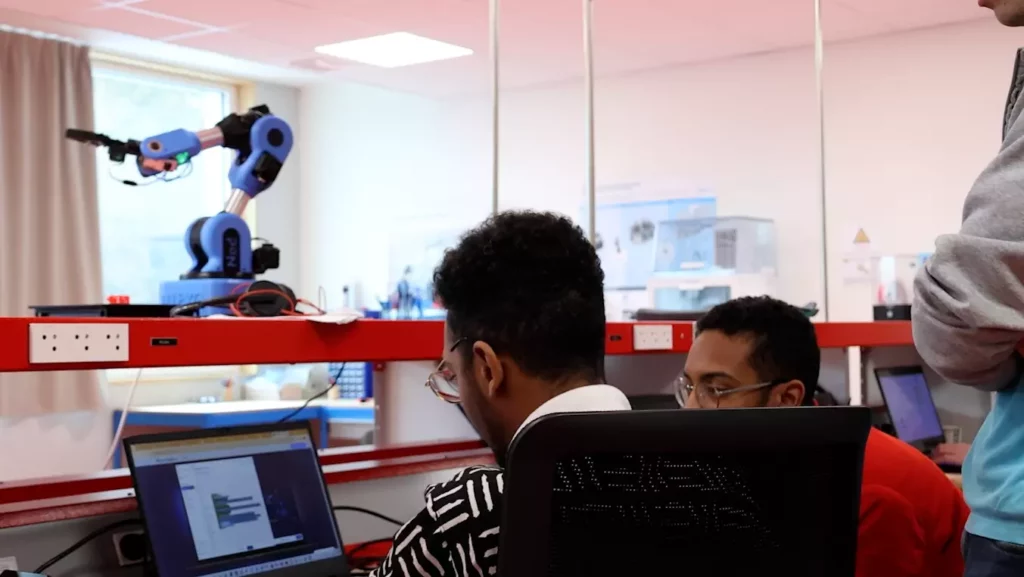
Nils Beaussé, head of the Usine du Futur Robotics training program and supervisor of the Niryo 6-axis robotic arm project, tells us that one of the objectives and needs of his training program is to implement AI algorithms on these robotic arms.
The needs of ISEN Nantes were above all to be able to benefit from non-industrial equipment, as the robotic arms on this market are very expensive.
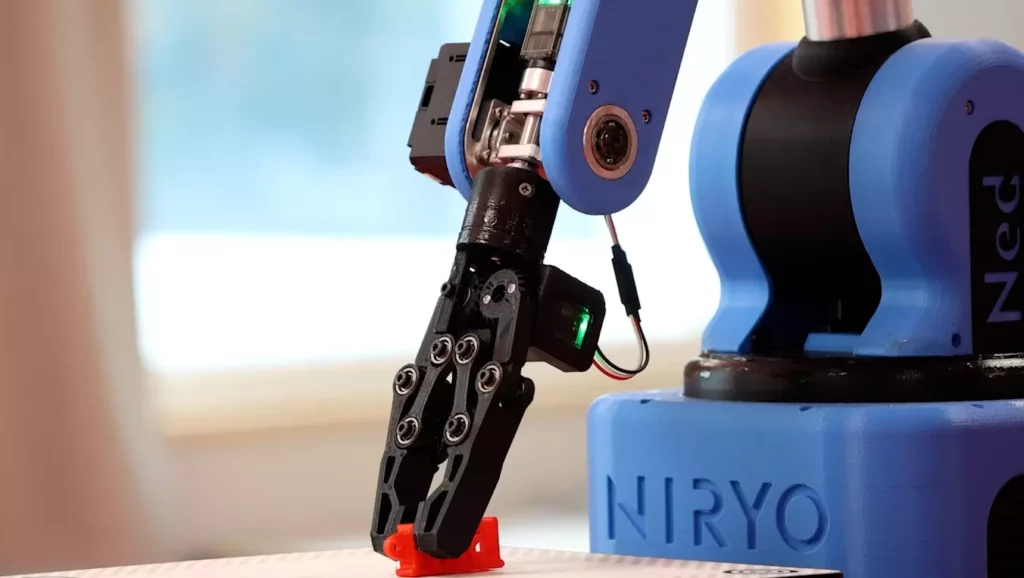
This robotics – factory of the future (industry 4.0) course therefore acquired Niryo’s 6-axis robotic arms solely for the needs of this section. The arms are used for research into cobotics and robot-human interaction.
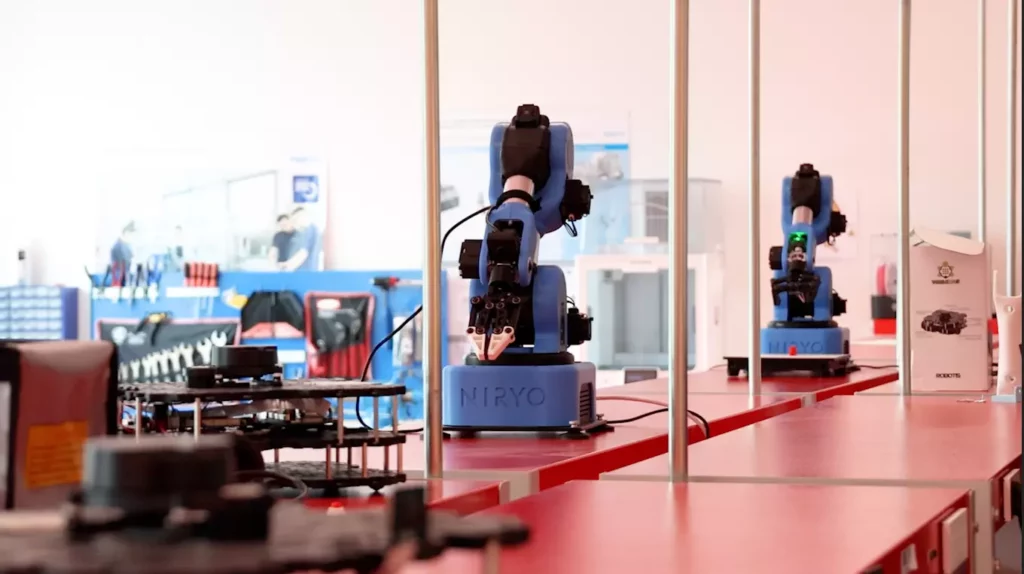
As mentioned above, Niryo’s educational robotic arms are used for a variety of purposes. Nils Beaussé explains one of the projects carried out by his students:
“As part of a final year project, a pair of students are working on Niryo robots. Their objective is to translate the Niryo robot language with its own interface. The robots can communicate in TCP IP and Modbus. The aim is to give the robots their own instructions using C languages, so that they can then link them with algorithms. They will then test the robots with different AI algorithms.”
For the training course he is responsible for, Mr Beaussé tells us what value Niryo brings:
“In process and use, Niryo robots are similar to factory arms. So they enable us to see how things work on a smaller scale, and in an environment more suited to schools. Also, the robots are more experimentable, which means we can test a lot of things on them before putting them on a big arm and modifying parts as needed. Ned2 is an experimental robot perfect for schools.
As mentioned above, ISEN Nantes is a 300-student campus belonging to a group of 5 Yncrea campuses spread across France in Brest, Caen, Rennes and Paris. The engineering courses are divided into 15 different professional fields and are taught in 5 post-baccalaureate cycles: generalist, IT, mechanics, ergonomics and environment, with over 98% professional integration at the end of the course.
The brand-new 4000 square meter building, completed in 2021, offers students a pleasant living environment, enabling them to fully develop their skills in the new classrooms and computer rooms, as well as in the fully-equipped areas dedicated to cybersecurity, connected objects, electrical energy and the factory of the future.